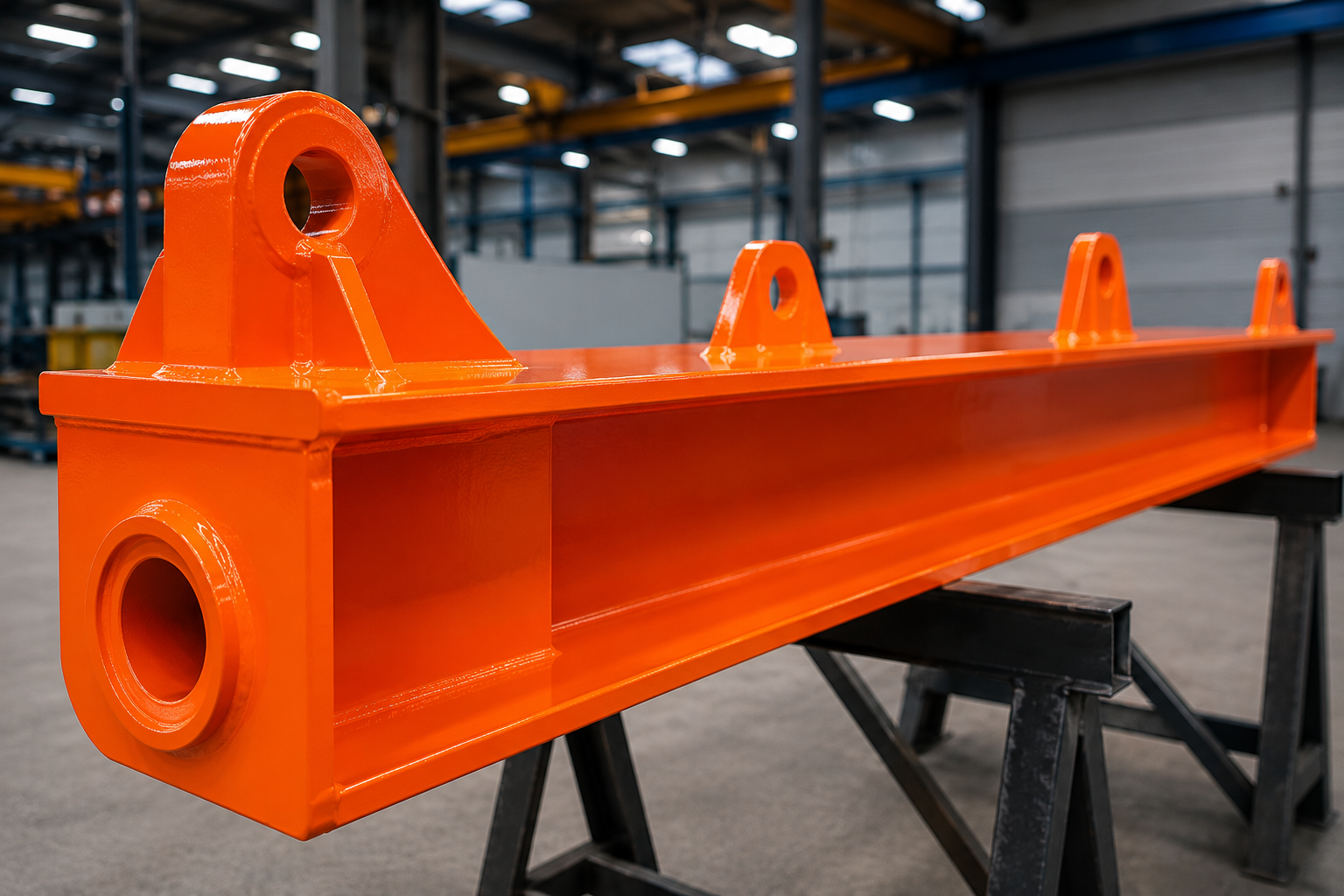
When discussing industrial coating, the focus is often placed on the type of coating, the colour or the chemical resistance of the system. However, there is a much less visible factor that directly affects the final result: the physics behind how the coating behaves.
Industrial coatings do not distribute uniformly across every surface. Their behaviour varies depending on the geometry of the part, environmental conditions and the properties of the material being applied. Understanding this phenomenon is essential to ensure the durability, adhesion and protection of the coating system.
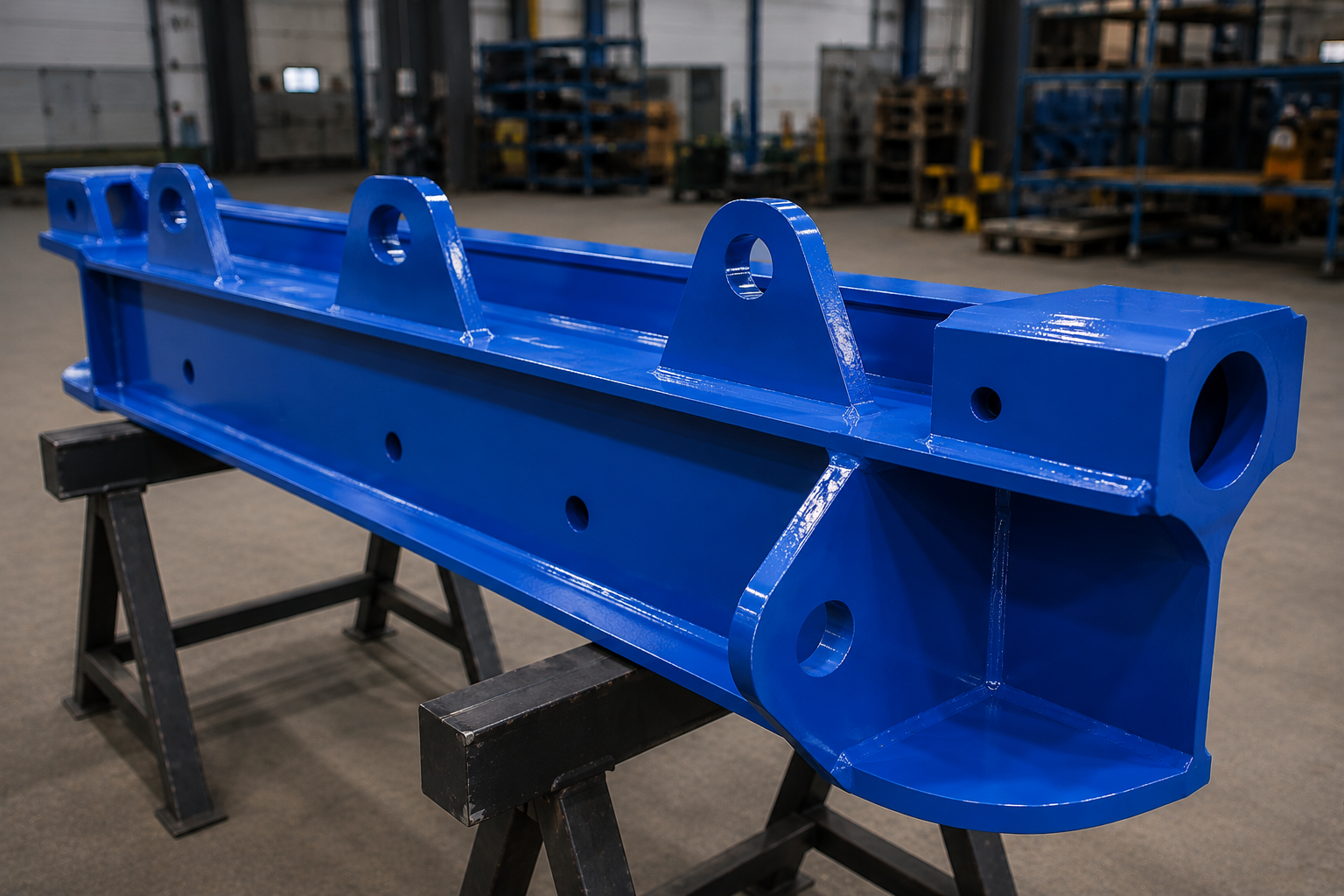
Coatings are also governed by physics
During application and curing, paint behaves like a fluid subjected to different physical forces. Gravity, surface tension, viscosity and temperature directly influence how the coating spreads and the final thickness achieved in each area of the part.
Contrary to what may often be assumed, paint does not simply remain exactly where it is applied. During curing, the material continues to move, retract and redistribute depending on the shape of the surface and the surrounding conditions. This physical behaviour is precisely what explains many performance differences between apparently similar parts.
Why edges are critical areas
One of the most common examples is the behaviour of paint on sharp edges and corners.
When paint is applied to a flat surface, the coating tends to spread relatively evenly. On sharp edges, however, surface tension causes the material to pull away during curing, reducing the final coating thickness in these areas.
To the naked eye, this difference may be almost imperceptible. From a technical perspective, however, it is critical, as edges often become the first vulnerable areas of the part. This is where the first signs of corrosion, wear or premature degradation of the system frequently appear.
For this reason, many industrial specifications require special treatment or additional controls on edges and cut areas, particularly for parts exposed to aggressive environments or high mechanical demands.
The importance of viscosity and temperature
Paint viscosity is another determining factor. If it is too high, the product may not distribute correctly and can create build-up or surface defects. If it is too low, on the other hand, the risk of runs and insufficient coating thickness increases.
Temperature also directly affects coating behaviour. It influences product flow, solvent evaporation rates and the curing process. As a result, two applications carried out using the same coating system may behave very differently depending on the environmental conditions during the process.
In industrial coating, controlling the application environment is just as important as selecting the right type of paint.
Not all geometries behave the same way
The shape of the part also has a direct impact on the final coating result. Deep cavities, internal angles and vertical surfaces all create different behaviours during application.
In some areas, the coating tends to build up, while in others it is more difficult to reach or maintain the required thickness. This explains why part design is such an important factor in industrial coating processes.
In fact, many coating issues could be prevented if paintability criteria were considered from the product design and engineering stage.
Industrial coating: Much more than applying a product
The performance of a coating does not depend solely on the quality of the paint used. It also depends on how it is applied, the geometry of the part, the conditions in which the process takes place and the level of technical control involved.
Industrial coating is a process in which physics, chemistry and technical expertise work together. Understanding how a coating actually behaves is what makes it possible to turn a correct application into a truly durable coating system.
At Mestres Pintura Industrial, we approach every project taking all these factors into account, because we know that the invisible details are ultimately what determine the final performance of every surface.