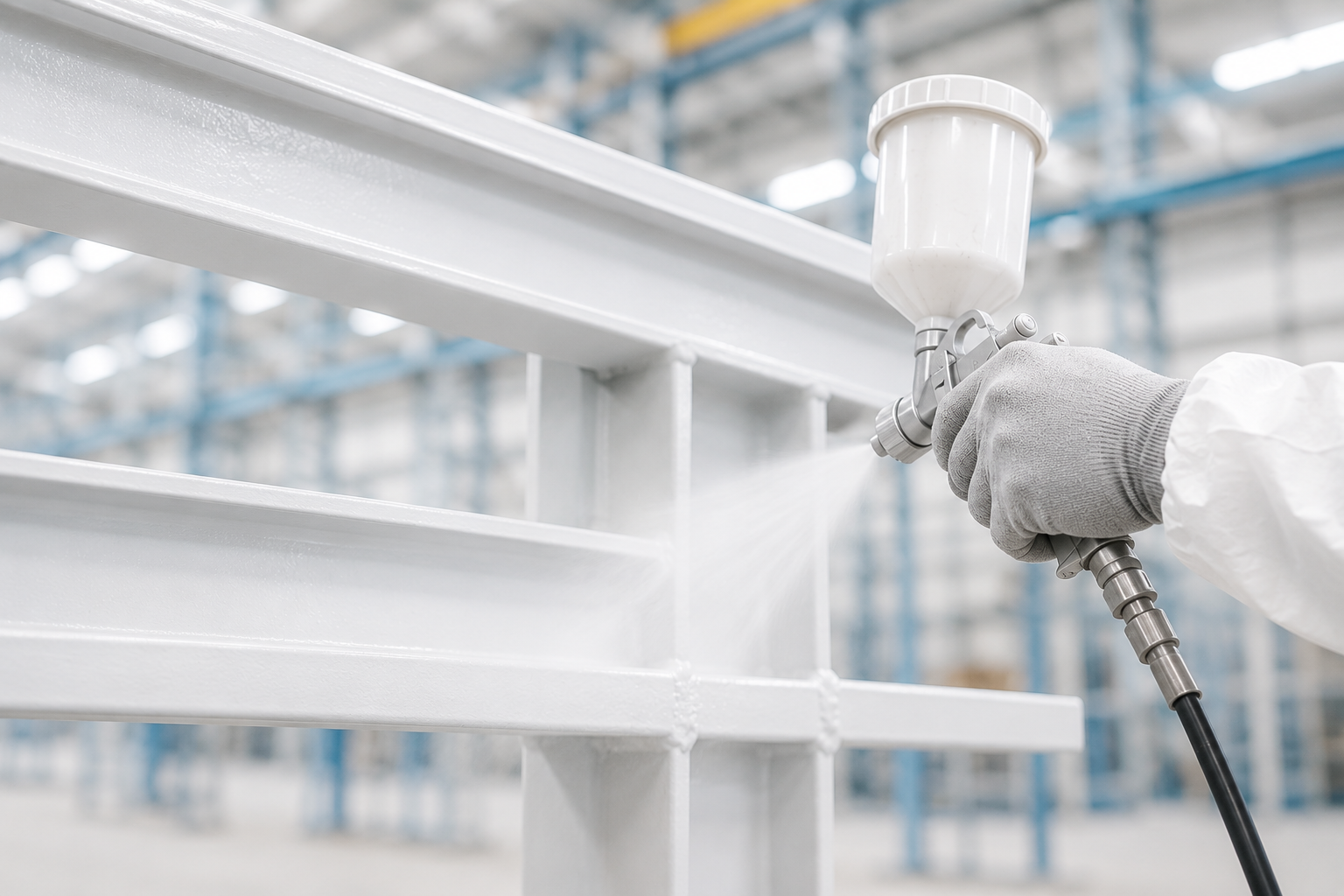
When we think about industrial painting, the focus is often placed on the type of paint that will be applied. However, the success of a coating does not depend solely on the product selected.
To achieve a resistant and durable finish, industrial painting must be understood as a complete system involving several stages: surface preparation, coating selection, application, drying and final quality control.
If one of these stages fails, the overall performance of the system will also be affected.
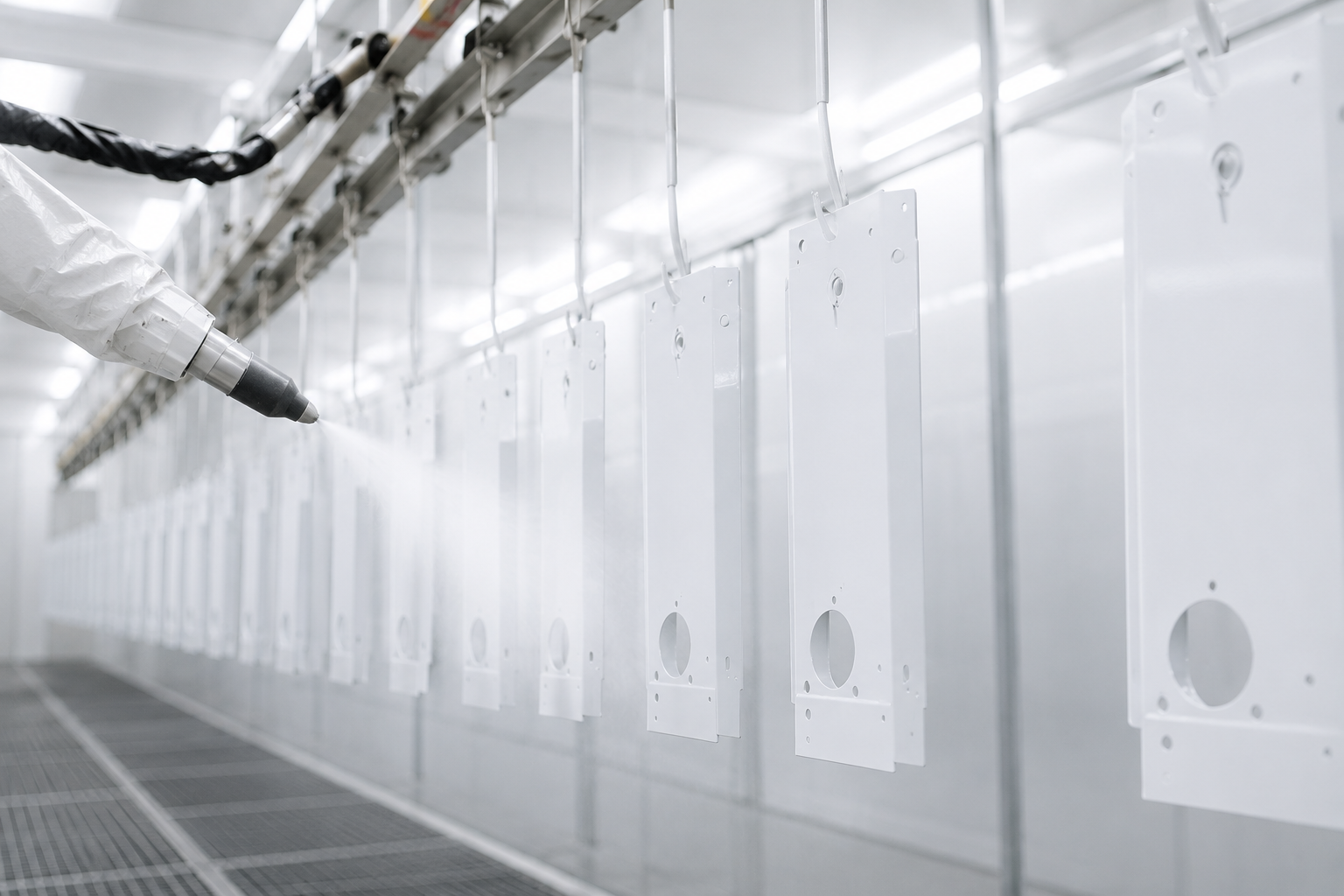
It All Starts Long Before Painting
A good industrial coating process begins before the paint container is even opened.
The condition of the surface is critical to ensuring proper adhesion. Traces of grease, dust, rust, moisture or old paint can compromise the effectiveness of the system, regardless of the quality of the product being used.
For this reason, proper surface preparation through processes such as degreasing, sanding or shot blasting is essential to achieve a durable coating.
Choosing the Right System Makes the Difference
There is no single paint system suitable for every project.
Each installation, structure or component is exposed to different conditions: marine environments, chemicals, moisture, solar radiation or mechanical wear. Therefore, selecting the most appropriate coating system for each situation is essential.
The combination of primers, intermediate coats and finishes must be designed according to the material, the environment and the expected service life, always seeking the best balance between protection and durability.
Proper Application Is Also Essential
Choosing the right system is just as important as applying it correctly.
Factors such as temperature, humidity, the thickness of each coat and drying times directly influence the performance of the coating.
Respecting these conditions allows the paint to achieve its full performance and provide the expected level of protection for longer.
Quality Control Completes the Process
The job does not end once the paint has been applied.
Checking coating thickness, verifying adhesion and visually inspecting the finish are essential steps to ensure that the system meets the project requirements and provides greater assurance of long-term durability.
In addition, effective quality control makes it possible to detect potential issues before the part enters service, helping to prevent future repairs and unnecessary costs.
A Comprehensive Approach for Better Results
Industrial painting goes far beyond applying a coating to a surface. It is a process in which every stage influences the next, and where proper planning makes the difference between a system that provides protection for years and one that requires premature intervention.
At Mestres Pintura Industrial, we approach every project from a comprehensive perspective, analysing every stage of the process to provide solutions tailored to each client’s needs.
Because when preparation, application and quality control work together, the result is a more resistant, more efficient and significantly more durable coating.